


The Handmade Comeback: Why Crafts Are Having a Major Moment in 2026
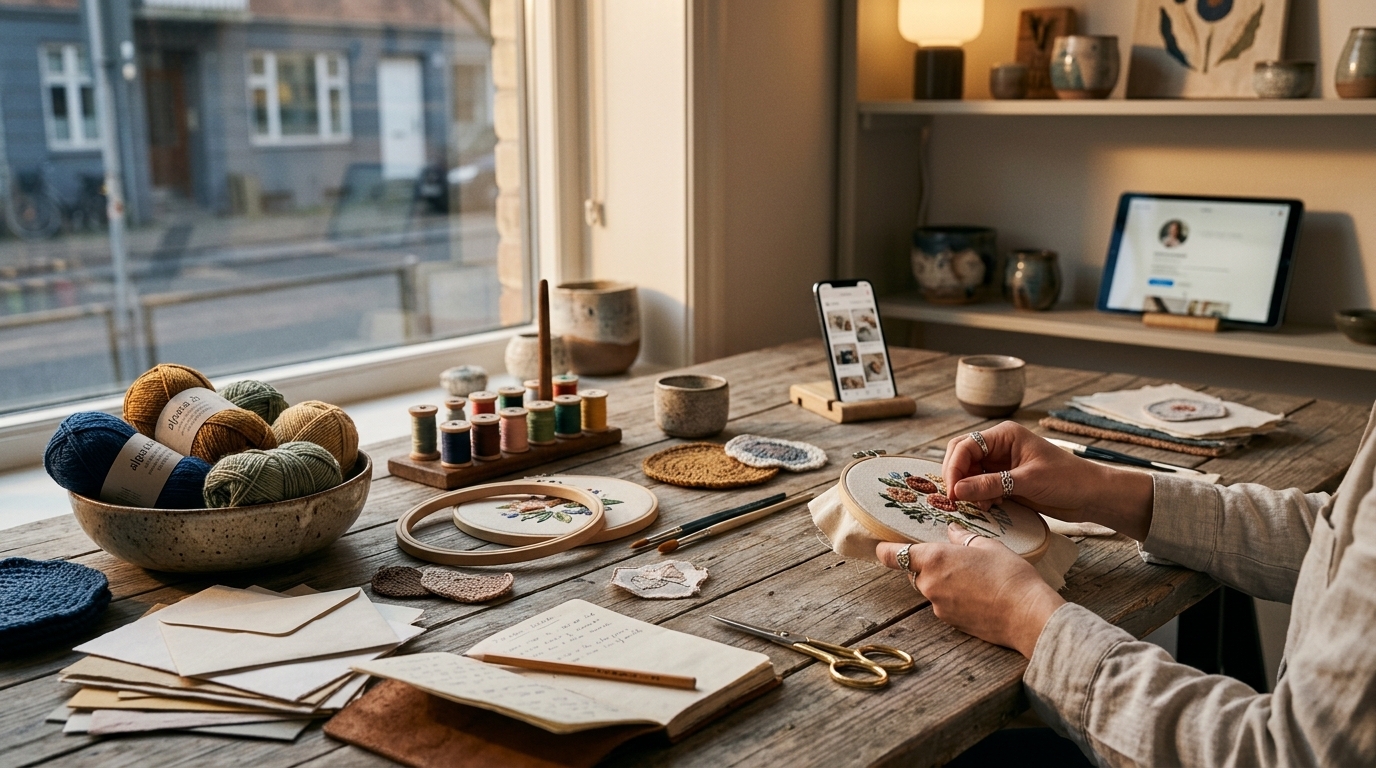
What if one of the best ways to escape the digital world is to simply make something with your hands?
In 2026, crafting is no longer being treated as an old-fashioned hobby. From crochet and embroidery to journaling, needlepoint, handmade décor, and personalized gifts, people are increasingly looking for creative activities that feel tangible, personal, and genuinely human.
Current trend reports from Etsy, Pinterest, and major craft retailers all point toward the same broader shift: people are becoming more interested in handmade creativity, personalization, and offline experiences.
Why Are Crafts Becoming Popular Again?
We spend much of our lives surrounded by screens, notifications, algorithms, and instantly generated content.
Crafting offers the opposite experience.
You slow down. You work with physical materials. You make mistakes, adjust them, and eventually create something that did not exist before.
That sense of making something yourself is becoming increasingly valuable.
Michaels' 2026 creativity research describes crafting as a way people are using creativity to feel grounded, connect with others, personalize their surroundings, and express themselves.
Crochet, Embroidery and Visible Craftsmanship Are Standing Out
One of the clearest trends is the renewed interest in traditional textile crafts.
Etsy's Spring/Summer 2026 trend report highlights a "Soft Stitch Era," with crochet, embroidery, and stitched textures gaining attention. Etsy reported searches for embroidered straw bags rising by 20,000%, while sales for crochet clothing increased by 36% in its reported trend data.
The important part isn't simply the technique.
It's the human touch.
Small imperfections, visible stitching, unusual combinations of materials, and handmade details can make an item feel more individual than something produced identically thousands of times.
The Return of Analog Creativity
Crafting is also part of a larger return to activities that do not require a screen.
Journaling, scrapbooking, photo albums, handwritten letters, needlepoint, and other tactile projects are finding new audiences.
Pinterest's 2026 trend research similarly points toward growing interest in hobbies that involve creating, collecting, documenting, and personalizing physical experiences.
For many people, the appeal is simple:
Create something instead of endlessly consuming something.
Personalization Is Becoming More Important
A handmade product doesn't have to be complicated to be special.
A customized notebook.
A hand-painted flower pot.
An embroidered name.
A personalized gift box.
A handmade wall decoration.
A scrapbook containing someone's memories.
The value often comes from the fact that the item feels made for a particular person rather than made for everyone.
Etsy's current trend research also highlights growing interest in meaningful keepsakes, personalized products, gifting, and products that make everyday moments feel more special.
Crafts Are Also Becoming a Business Opportunity
The craft revival isn't only about hobbies.
For creative entrepreneurs, it creates opportunities to turn skills into products and services.
Instead of trying to manufacture hundreds of identical products, small creators can focus on:
- Personalized gifts
- Handmade home décor
- Crochet and embroidery products
- DIY craft kits
- Custom event decorations
- Handmade stationery
- Memory books and journals
- Upcycled and repaired products
- Custom accessories
- Workshops and craft experiences
The advantage is differentiation.
A handmade business doesn't necessarily have to compete purely on price. Story, craftsmanship, personalization, and uniqueness can become part of the product's value.
What Should Beginners Start With?
You don't need an expensive workshop or years of experience.
Start with something simple.
Try embroidery, paper crafts, journaling, basic crochet, clay work, painting, upcycling, or handmade cards.
Choose one project that you can realistically finish within a few hours.
The goal isn't to create something perfect.
The goal is to create something real.
Once you finish your first project, you can gradually experiment with better materials, more advanced techniques, and your own creative style.
The Biggest Opportunity: Make It Yours
Trends can provide inspiration, but copying every popular craft won't necessarily make your work memorable.
The strongest handmade products often combine a trend with something personal.
Take a popular technique such as embroidery and combine it with local cultural patterns.
Take journaling and create a travel-memory product.
Take crochet and develop a distinctive color palette.
Take traditional craft techniques and reinterpret them for modern homes.
That's where craft becomes design.
The Future of Crafting
The craft movement isn't necessarily about rejecting technology.
In fact, technology can help makers discover ideas, learn techniques, photograph their products, market their work, and reach customers around the world.
The interesting combination is digital discovery + physical creation.
You might discover an idea on Pinterest, learn the technique from a video, design your concept digitally, and then spend several hours creating the final piece by hand.
That combination could make modern crafting more accessible than ever.
Final Takeaway
In a world where more things are becoming automated, instant, and digitally generated, something made slowly by a human hand can become surprisingly valuable.
Crafting gives people more than a finished object.
It gives them time, creativity, identity, and something tangible to keep.
So if you've been thinking about starting a craft, don't wait until you're "creative enough."
Pick one material.
Pick one idea.
Make something.
Because in 2026, handmade isn't simply making a comeback — it's becoming a way to make everyday life feel more personal.
