


Music in 2026: Why the Next Global Hit Could Come From Anywhere
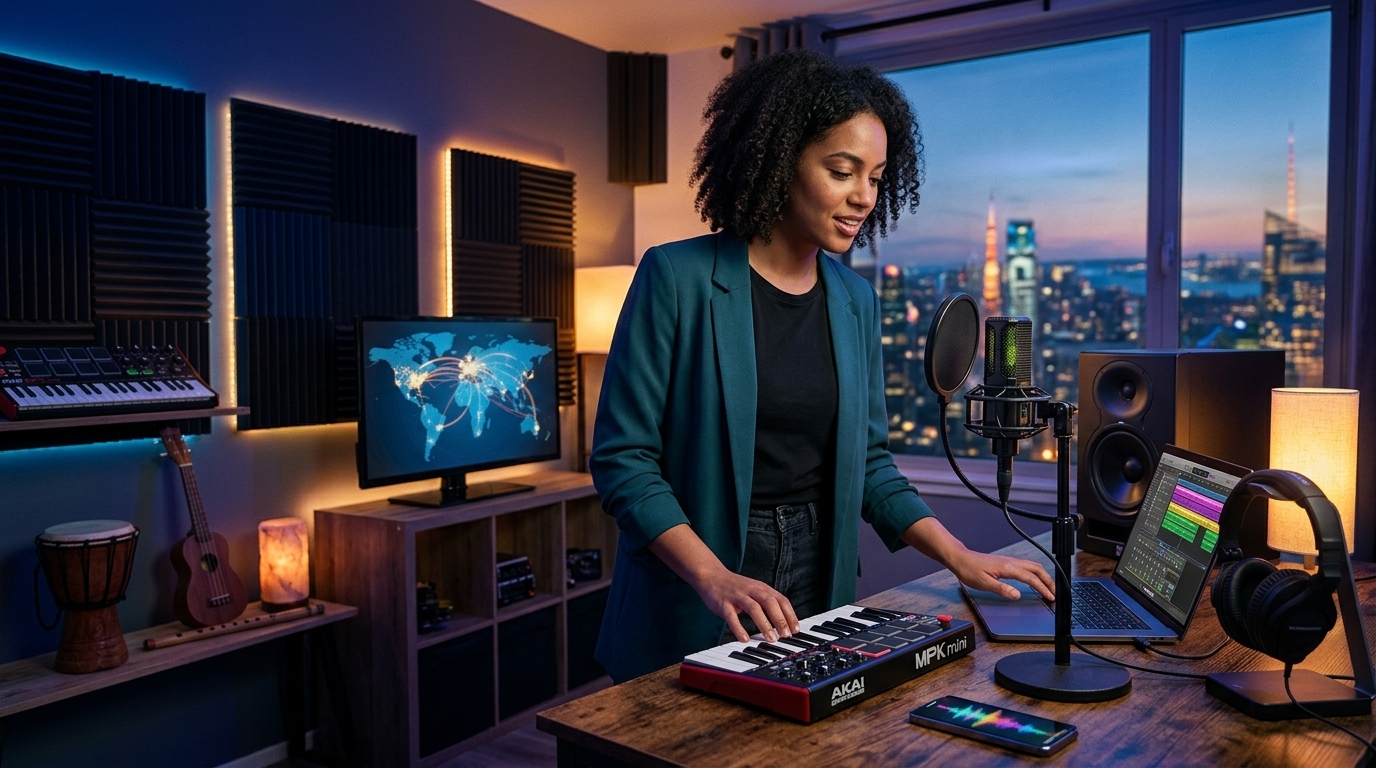
A song no longer needs to come from a major music capital to become a global hit.
It can start in a bedroom studio, be recorded on a laptop, gain attention through short-form video, cross language barriers through streaming, and eventually reach listeners thousands of kilometres away.
That isn't just a theory. The global music industry is continuing to expand, while the way people discover, create and consume music is changing rapidly.
According to IFPI's Global Music Report 2026, global recorded music revenue reached US$31.7 billion in 2025, growing 6.4% year over year. Streaming generated 69.6% of global recorded music revenue, while paid subscription streaming alone accounted for 52.4%.
But perhaps the most interesting change isn't the size of the industry.
It's who now has the opportunity to participate in it.
Music Has Become Truly Global
For decades, international music success was heavily influenced by geography, language and access to major record labels.
Streaming has changed that equation.
Spotify reported that songs in 16 languages reached its Global Top 50 during 2025—more than twice the number in 2020. Several non-English genres also experienced significant growth, including Brazilian funk, K-pop, Latin trap, Latin urban and reggaeton.
The lesson is important for emerging artists:
You don't necessarily need to sound international to become international.
Your language, culture and local sound can actually become part of your competitive advantage.
The Rise of the Independent Artist
You don't necessarily need a major label to start building an audience.
Spotify's 2026 data shows that more than a third of artists who generated at least $10,000 in Spotify royalties during 2025 were DIY artists or had started their careers that way.
That doesn't mean becoming a successful musician is easy.
It means the barriers to entry have changed.
Artists can now record music, distribute releases, build social media audiences, communicate directly with fans and develop their visual identity without waiting for a traditional industry gatekeeper to discover them.
The difficult part has moved from access to attention.
Streaming Is Powerful—but One Stream Isn't a Paycheck
There's a common misconception that streaming platforms simply pay a fixed amount every time someone plays a song.
That's not how the system works.
Spotify explains that it does not use a fixed “per-stream rate.” Royalties are calculated using streamshare and paid to the relevant rightsholders, who then distribute money according to their agreements.
Still, the scale of the streaming economy is enormous.
Spotify says it paid more than US$11 billion to the music industry in 2025, with independent artists and labels accounting for roughly half of its royalties.
For artists, this highlights an important reality:
A sustainable music career is rarely built around one viral song.
It's built around a catalogue, an audience and multiple revenue streams.
Your Catalogue Is an Asset
Imagine releasing one song and hoping it goes viral.
Now imagine having 30 strong songs available to new listeners who discover you today.
The second situation creates a much stronger foundation.
Every new song can introduce people to your older work. A listener who discovers one track can potentially become a fan of an entire catalogue.
That's why consistency matters.
Instead of asking only:
“How can I make my next song go viral?”
Artists should also ask:
“If someone discovers me today, do I have enough music for them to stay?”
Social Media Has Changed Music Discovery
Music discovery no longer happens only through radio stations, television or traditional music publications.
People encounter songs while watching videos, following creators, exploring playlists, sharing clips and searching for sounds that match a particular mood.
This has changed how songs themselves are created and promoted.
A memorable chorus, distinctive sound, emotional moment or short musical section can become the entry point into an artist's world.
But chasing trends isn't the same as building a career.
A trend can bring attention.
Only a connection with listeners can turn attention into a fanbase.
AI Is Opening a New Chapter—and New Questions
Artificial intelligence is becoming one of the biggest conversations in music.
AI tools can assist with areas such as production, composition, workflow and experimentation. At the same time, the industry is debating copyright, consent, artist rights, licensing and the responsible use of creative material.
IFPI's 2026 report identifies AI innovation and the industry's response to streaming fraud as major issues shaping music's next era. It also describes efforts to develop licensing models that allow AI innovation while protecting creators' rights.
For musicians, the practical approach is neither blind excitement nor complete rejection.
Learn the technology.
Understand what you're using.
Protect your rights.
And most importantly, don't underestimate what makes human-created music valuable: identity, emotion, experience and artistic point of view.
Streaming Fraud Is a Growing Problem
The darker side of the streaming economy is artificial streaming—manufactured plays designed to manipulate platforms and generate royalties or visibility.
IFPI identifies streaming fraud as a significant threat to the music ecosystem, warning that manipulated plays can divert revenue from legitimate artists and other creators.
For emerging musicians, this is a useful warning:
Don't buy fake streams.
Artificial numbers might make an artist look successful temporarily, but they don't create genuine fans, meaningful engagement or a sustainable career.
Real listeners are worth far more than inflated statistics.
Live Music Still Matters
Streaming hasn't eliminated the importance of physical experiences.
In fact, the two can reinforce each other.
Spotify reported that its platform drove more than US$1.5 billion in gross concert ticket sales for artists by the first half of 2025.
A listener discovers an artist online.
They become a fan.
They follow the artist.
Then they buy a ticket, merchandise or another product.
The modern music career is increasingly an ecosystem rather than a single income source.
What Emerging Artists Should Do in 2026
If you're an independent musician, focus on five things.
1. Build a recognisable identity.
Your sound, visuals, story and personality should feel connected.
2. Release consistently.
Don't disappear for years waiting for one “perfect” song.
3. Own your audience.
Streaming followers are valuable, but direct relationships through social platforms, email lists, communities and live events can be even more powerful.
4. Understand your rights.
Keep accurate information about songwriters, splits, recordings and registrations. Missing or incorrect metadata can interfere with royalty collection.
5. Think globally—but stay authentic.
You don't have to copy American or European sounds to reach international listeners.
The Biggest Opportunity Is No Longer Just Getting Discovered
The music industry is bigger, more connected and more accessible than it was a generation ago.
But that also means there is more competition.
Thousands of new songs can appear every day.
So the question isn't simply:
“How do I get people to hear my music?”
It's:
“Why should they remember me?”
Technology can distribute your music.
Algorithms can recommend it.
Social media can introduce it.
But the artist still has to create something worth remembering.
The Takeaway
Music in 2026 is more global than ever.
Streaming is driving the industry's growth. Independent artists have more tools than previous generations. Local languages and genres can cross borders. AI is creating new possibilities—and new challenges.
But one principle hasn't changed:
People don't become lifelong fans because an algorithm told them to listen. They become fans because a song made them feel something.
The next global music sensation could come from a major studio.
Or it could come from a bedroom, a small town or an artist nobody has discovered yet.
The technology has already made the world smaller.
Now the opportunity is yours to make something worth hearing.
